The Gambler's Trap
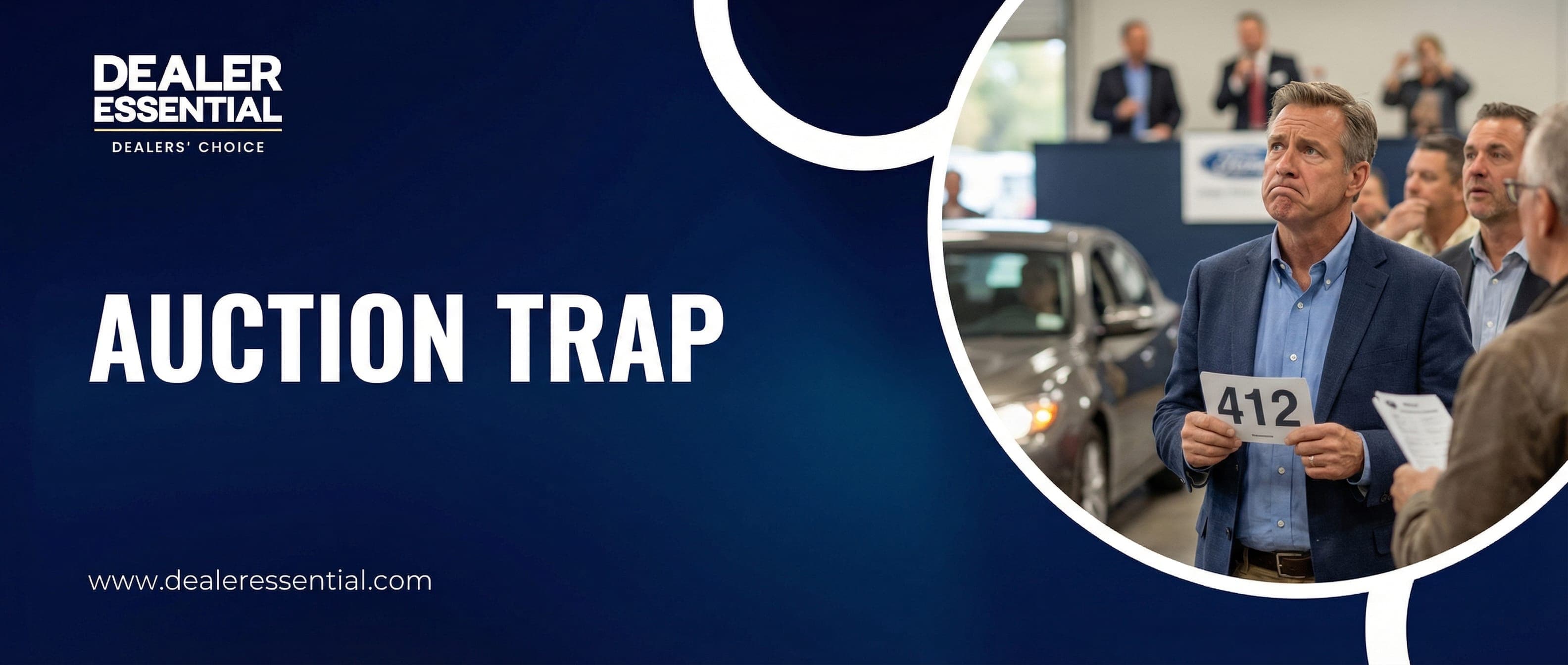
Auctions are psychologically designed to trigger competitive bidding. The dealers who survive don't go to "see what's there"—they go with a specific list, specific prices, and walk away when the math doesn't work. If you're bidding to WIN rather than to PROFIT, you're already losing.
I've watched it happen more times than I can count. A new dealer, excited about their first auction, comes back with a beautiful 2019 BMW 3 Series. Low miles. Clean CarFax. Great condition.
The problem? They run a small lot in a working-class neighborhood where their customers are looking for $8,000-$15,000 reliable sedans. That BMW is going to sit there for four months while they bleed holding costs, and eventually they'll wholesale it at a loss.
When I asked why they bought it, the answer was always some version of: "It was such a nice car. I couldn't let it go."
That's not a business decision. That's emotional gambling. And it's the fastest way I know to go broke in this business.
Why Auctions Are Designed to Make You Overbid
Let's be clear about something: car auctions are not neutral marketplaces. They're engineered environments designed to maximize sale prices. Every element—the fast pace, the competing bidders, the auctioneer's cadence—is optimized to trigger your competitive instincts.
- The rapid-fire pace prevents careful calculation
- Seeing others bid triggers fear of missing out (FOMO)
- The auctioneer creates artificial urgency
- Winning releases dopamine—the same brain chemical triggered by gambling
- Public bidding engages your ego ("I can't let that guy beat me")
- The environment is loud, fast, and overwhelming by design
Casinos use similar tactics. The flashing lights, the sounds of winning, the lack of clocks or windows—it's all designed to keep you playing. Auctions aren't that different.
The Dopamine Hit
The Two Mistakes That Kill New Dealers
Mistake #1: Buying Cars You Would Drive
Your personal taste is irrelevant. Full stop. What YOU find attractive in a car has nothing to do with what your CUSTOMERS want to buy.
I see this constantly with new dealers. They're car enthusiasts who got into the business because they love cars. They see a clean sports car or a loaded luxury sedan, and their personal desire kicks in. They think: "This is exactly what I'd want. Someone else must want it too."
But your lot isn't selling to car enthusiasts. It's selling to people who need transportation. They want reliability, good gas mileage, reasonable payments, and enough space for their kids. They don't care about your opinions on BMWs.
"The moment you start buying cars you personally like instead of cars your market actually buys, you've stopped being a dealer and started being a collector who's going broke."
— Lesson learned from too many failed dealerships
Mistake #2: Bidding to Win Instead of Bidding to Profit
Here's how the addiction starts:
- You lose a few bids early in the day. Frustrating.
- You see a car you want. Someone else bids. Your competitive instinct kicks in.
- You bid higher than you planned. They bid again.
- Now it's personal. You NEED to win this one.
- You win! Dopamine floods your brain. Feels great.
- You don't even remember what your max bid was supposed to be.
- You paid $800 more than the car is worth to your lot.
- But you won. And winning felt good.
- Next auction, you do it again. And again.
Within a few months, you've built an inventory of cars you overpaid for, that don't match your market, and that won't move without taking a loss. Your cash is trapped. Your floor plan payments are piling up. And you still feel the pull to go to the next auction and "win" more.
The 3-6 Month Countdown
Warning Signs You're Bidding Emotionally
Be honest with yourself. How many of these apply to you?
- You go to auction without a specific list of what you're looking for
- You've said "I'll know it when I see it" about your buying strategy
- You've bought a car because "it was too nice to pass up"
- You feel a rush when you win a bid
- You feel frustrated or angry when you lose a bid
- You've increased your max bid in the heat of the moment
- You've thought "I can't let that guy beat me"
- You justify overpaying because "the market is hot"
- Your inventory has cars sitting 60+ days that don't fit your typical buyer
- You're excited to go to auction (it should be work, not entertainment)
If three or more of these hit home, you're not buying inventory—you're gambling. And the house always wins.
Know What Actually Sells on Your Lot
Our inventory analytics show you exactly which vehicles move fastest and generate the most profit. Go to auction with data, not guesses.
The Auction Discipline System: How Profitable Dealers Buy
The dealers who stay profitable at auction don't have superhuman willpower. They have systems that remove emotion from the process.
Rule 1: The Buy List Is Non-Negotiable
Before you step foot in an auction, you should have a written list of:
- Specific makes/models you're looking for
- Year range acceptable
- Mileage limits
- Maximum buy price for each (based on your selling price minus profit margin)
- Condition requirements
- What you will NOT buy under any circumstances
This list should be based on data: what's sold on your lot in the past 90 days, what your market is searching for, what generates the best margins. Not what you think is cool.
The "What Would I Drive" Test
Rule 2: Calculate Max Bid BEFORE You See the Car
Your max bid should be calculated before you get emotionally attached:
- Look up the realistic retail price for your market
- Subtract your minimum acceptable profit margin (typically $1,500-2,500)
- Subtract estimated reconditioning costs
- Subtract transport costs
- Subtract auction fees
- What's left is your ABSOLUTE maximum bid
Write it down. When bidding gets competitive, you look at your number. If the bid exceeds it, you stop. No exceptions. No "just $200 more."
Rule 3: Walk Away Power
The most powerful weapon at auction is the willingness to leave empty-handed.
If nothing matches your list at your prices, you don't buy. Period. Going to auction doesn't mean you have to buy something. The dealers who feel like they "need" to come back with cars are the ones who overbid.
I've left auctions without buying a single car. It feels strange at first—like you wasted the trip. But buying the wrong car at the wrong price costs far more than a wasted trip.
Rule 4: Never Bid on Something Not on Your List
This is where discipline gets tested. A beautiful car comes through that wasn't on your list. Great price. Clean condition. You start to rationalize...
Stop. If it wasn't on your list, there was a reason. Maybe it doesn't match your market. Maybe the segment doesn't turn fast enough. Maybe maintenance costs are too high. Whatever the reason, you made the decision with a clear head before auction. Trust that version of yourself.
Rule 5: Track Your Emotions, Not Just Your Bids
After each auction, ask yourself:
- Did I exceed my max bid on any car? Why?
- Did I feel frustrated when I lost a bid?
- Did I buy anything not on my list?
- Did I feel a "rush" when I won?
- Would I have bought differently if I wasn't competing with that specific bidder?
Honest answers reveal whether you're buying strategically or emotionally.
How to Build a Data-Driven Buy List
Your buy list shouldn't come from your gut. It should come from your data:
Look at What Actually Sells
- Which vehicles sold fastest in the last 90 days?
- Which vehicles generated the highest profit margins?
- Which price range turns quickest for your lot?
- What are customers actually searching for on your website?
- What are your competitors successfully selling?
Know Your Market
- Who is your actual customer? (Demographics, income level, needs)
- What do they prioritize? (Price? Reliability? Size? Fuel economy?)
- What price range can they realistically afford?
- What kind of financing do they typically qualify for?
If your typical customer is a working family with average credit looking for a reliable vehicle under $15,000, your buy list should be full of Camrys, Accords, and Malibus—not BMWs and Mustangs.
Tools for Smarter Buying
Already Stuck with Bad Inventory? Here's How to Recover
If you're reading this and realizing you've already fallen into the trap, here's the path out:
- Stop the bleeding. No more auction trips until you have a system in place.
- Audit your current inventory. Which cars don't fit your market?
- Price to move. Those mismatched cars need to go—even at reduced profit or small loss.
- Wholesale the worst offenders. A quick loss is better than slow death.
- Free up cash. Use recovered capital to buy the RIGHT inventory.
- Build your buy list based on data.
- Return to auction with discipline—or don't return at all until you're ready.
The Sunk Cost Reality
Alternatives to High-Pressure Auctions
If you know you struggle with auction psychology, consider alternative sourcing:
- Online auctions: Slower pace, more time to think, no in-person competitive pressure
- Trade-ins: Build your inventory from your own customers
- Dealer-to-dealer purchases: Negotiate without auction pressure
- Off-lease programs: Predictable inventory at predictable prices
- Private purchases: Time to evaluate without competition
There's no shame in avoiding environments that trigger bad decisions. Know yourself.
The Bottom Line
Auctions aren't evil. They're just high-pressure environments that reward discipline and punish emotion. The dealers who thrive have systems that remove feeling from the process. They go with lists, stick to numbers, and walk away when the math doesn't work.
The dealers who fail treat auctions like car shows—looking for vehicles that excite them personally, bidding competitively because winning feels good, and rationalizing overpayment because "it was such a nice car."
You're not collecting cars. You're running a business. The only question that matters is: will this specific car, at this specific price, generate acceptable profit in acceptable time for my specific market?
If the answer isn't a clear yes, let it go. There's always another auction. There's always another car. But there's not always another chance to save your business.
Your Action Item
Before your next auction, create a written buy list. Specify exactly which makes, models, years, and mileage ranges you're targeting. Calculate your max bid for each BEFORE you go. Take the list with you and commit: if it's not on the list at your price, you don't buy it. One disciplined auction trip will teach you more about profitable buying than ten emotional ones.
Frequently Asked Questions
Buy Smarter with Data
Our inventory tools show you what actually sells, how fast, and at what margin. Stop guessing at auction—start buying with confidence.