The Bottom Line
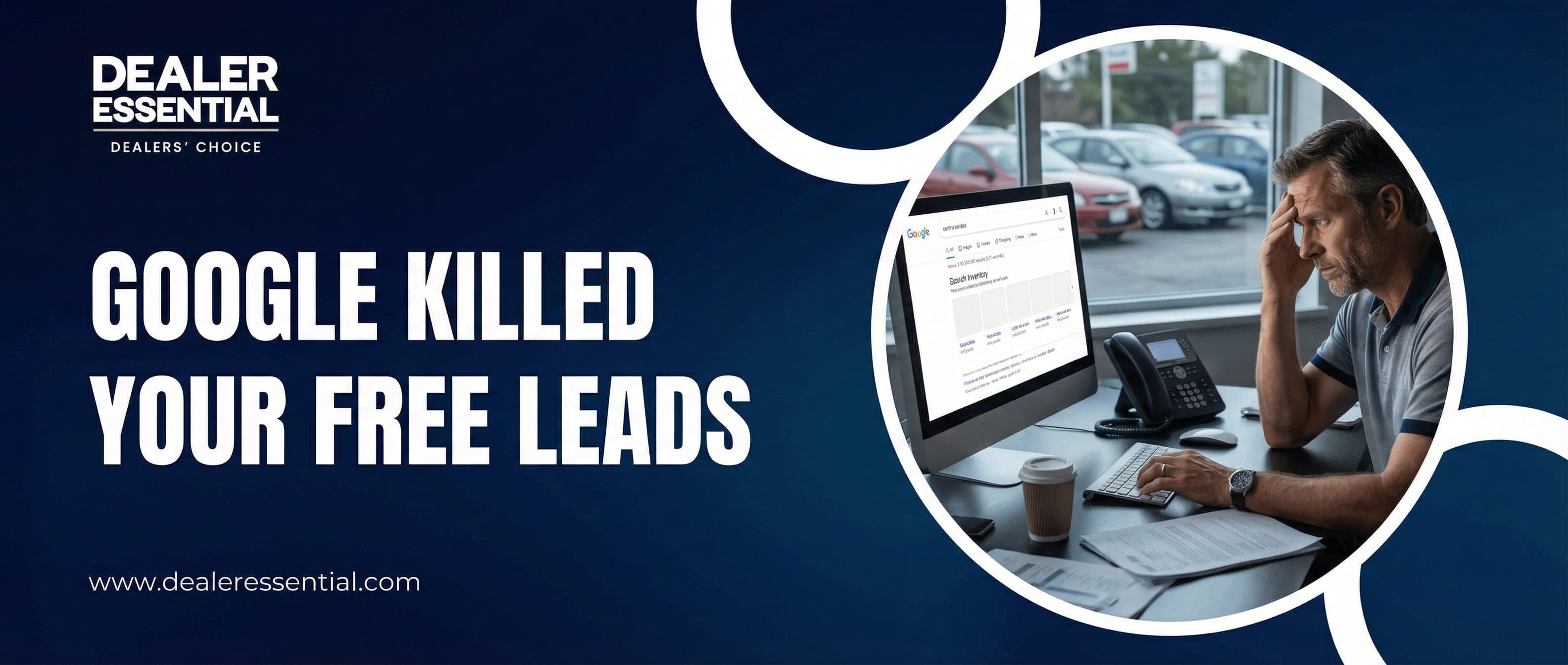
Google officially killed free Vehicle Listings on Business Profiles on November 12, 2025. If you're still paying a vendor to "sync inventory to Google," cancel it or demand answers. The only way to show inventory on Google now is through paid Vehicle Ads—or by outranking everyone else organically.
Something changed around November 2025. Your phone calls dropped. Your Google Business Profile views tanked. Customers stopped saying "I saw your car on Google." You figured it was seasonal. Holidays. Economy. Whatever.
It wasn't seasonal. Google quietly pulled the plug on one of the best free marketing tools small dealers had: the "Vehicles for Sale" tab on your Google Business Profile. That inventory feed you thought was bringing in leads? It's gone. Dead. Deprecated.
And here's the kicker: many dealers are still paying vendors to "sync" their inventory to a feature that no longer exists.
Let's break down what actually happened, what Google wants you to do instead, and how to adapt without blowing your budget on ads that might not work.
What Google Actually Did (And Why)
On November 12, 2025, Google officially stopped processing data for the free "Vehicle Listings" feature. This was the inventory tab that appeared on your Google Business Profile—the one that let customers browse your cars directly from Google Search and Maps without you paying a dime.
The Official Reason
What's Gone
- The "Vehicles for Sale" tab on your Google Business Profile
- Free inventory appearing in local search results
- The old "Vehicle" structured data type that fed those listings
- Any vendor integration that relied on that deprecated feed
What Replaced It
Google now pushes dealers toward paid Google Vehicle Ads (VLAs). These ads show your inventory across Google Search, Maps, Shopping, and YouTube—but they require:
- A Google Merchant Center account with a vehicle inventory feed
- Performance Max (PMax) campaigns to manage ad delivery
- Properly structured landing pages with VIN, price, and availability
- Money. Budget. Ad spend.
If you're a small dealer who relied on the free tab for 10-30% of your leads, this is a gut punch. Google basically took something free, wrapped it in a paid product, and told you to swipe your credit card.
Step 1: Stop the Bleeding (Audit Your Vendor Bills)
Before anything else, check what you're paying for. Many dealers are still writing checks to providers for services that stopped working two months ago.
What to Look For
- "Google Inventory Sync" or "Google Vehicle Feed"—ask what this actually does now
- "Organic Google Listings"—if they're not running ads, this might be worthless
- Any service specifically mentioning "Google Business Profile inventory"
- Flat monthly fees for "SEO" that claim to include Google vehicle listings
Hard Question to Ask Your Vendor
Legitimate vendors will have pivoted to supporting Google Vehicle Ads or will offer a clear alternative. Shady vendors will give you vague answers. Either way, you need to know where your money is going.
Measure What You Lost
Before you can replace these leads, you need to know what you lost:
- Check your Google Business Profile Insights: Compare October 2025 to January 2026. How much did profile views and direction requests drop?
- Track phone calls: If you use call tracking, compare November-December 2025 to the same period in 2024.
- Ask customers: "How did you find us?" If "Google" answers dropped, there's your signal.
- Review your CRM: Tag leads by source. What happened to "Google" leads?
25-40%
Lead drop for dealers relying on free listings
$0
What free listings cost you before
$500+
Minimum monthly spend for Vehicle Ads
Nov 12
When Google pulled the plug
The New Reality: Google Vehicle Ads & Performance Max
Let's be honest about what Google is selling. Vehicle Ads can work, but they're complicated, expensive, and not designed for small dealers.
How Vehicle Ads Work
- You upload your inventory to Google Merchant Center (vehicle feed with VIN, price, mileage, images, etc.)
- You create a Performance Max campaign targeting vehicle shoppers
- Google's AI automatically shows your inventory across Search, Maps, Shopping, Display, and YouTube
- You pay per click (CPC) or per thousand impressions (CPM)
- Google optimizes delivery based on who's most likely to convert
The Small Dealer Problem
If You're Going to Try Vehicle Ads
Here's how to minimize waste if you decide to test Google Vehicle Ads:
- Start with "Vehicle Feed Only" campaigns—this limits where ads appear and prevents budget being wasted on generic display ads
- Set a strict daily budget ($20-50/day) until you see positive ROI
- Focus on your most profitable, fastest-turning inventory—not your aged units
- Ensure your website shows accurate, current pricing on vehicle pages (Google's Misrepresentation Policy is strict—your ad price MUST match your landing page price, no hidden fees)
- Track calls and form submissions obsessively—if you can't measure ROI, you can't optimize
The Misrepresentation Trap
Skip the Ad Complexity
Dealer Essential's Magic Lister posts your inventory to Facebook Marketplace, Craigslist, and more—platforms where buyers are actively searching, without the complexity of Google Ads.
The Free Path: Double Down on Organic Visibility
Can't afford—or don't want—to play Google's paid ads game? You're not out of options. But organic visibility now requires more effort than it used to.
Your Google Business Profile Still Matters
Even without the inventory tab, your Google Business Profile drives local visibility. Here's what to optimize:
- Reviews: More important than ever. Every 5-star review improves your local ranking. Systematically ask every happy customer.
- Posts: Use the "Update" feature weekly. Feature a "Car of the Week" with photos, price, and a link to your site. It's not as good as the old inventory tab, but it's free visibility.
- Q&A: Answer common questions ("Do you offer financing?", "Do you take trade-ins?") before customers ask them.
- Photos: Upload fresh vehicle photos regularly. Google favors active profiles.
- Attributes: Make sure your business attributes are complete—financing available, test drives, etc.
Your Website Must Rank
Without free Google inventory listings, your website's organic search ranking matters more than ever. Every vehicle page should be optimized:
- Title tags: "[Year] [Make] [Model] for Sale in [City] | [Dealership Name]"
- Meta descriptions: Include price, mileage, and key features
- Unique descriptions: Don't copy-paste the same text on every listing
- Schema markup: Implement Vehicle structured data (the new format, not the deprecated one)
- Mobile-first: 70%+ of car shoppers search on phones—your site must be fast and mobile-friendly
Video is Your Secret Weapon
Tools for Better Visibility
The Smart Move: Diversify Your Lead Sources
Here's the uncomfortable truth: relying 100% on Google was always a risk. You were renting your audience from a company that could change the rules anytime. They just did.
The dealers who barely noticed the sunset? They were already diversified.
Alternative Marketplaces That Actually Work
These platforms have active car buyers who are ready to purchase:
- Facebook Marketplace: Massive reach, free to list, built-in messaging. The catch: manual posting is tedious.
- Craigslist: Old school, but still drives serious buyer traffic in most markets. Especially for sub-$15K vehicles.
- CarGurus: Paid, but high-intent buyers. Their dealer ratings system rewards responsive dealers.
- AutoTrader / Cars.com: More expensive, but buyers on these platforms are further down the funnel.
- OfferUp: Growing fast for vehicles, especially in younger demographics.
The Multi-Platform Advantage
Own Your Audience
The only truly "safe" leads are the ones you control. That means:
- Collect every email and phone number: Even from browsers who don't buy. Permission-based follow-up costs almost nothing.
- Text marketing: Build a list of past customers and browsers who opt in. A "New Arrivals" text to 500 people is free.
- Referral program: Past customers who had a great experience are your best marketing. Make it easy to refer friends.
- Social following: Build your Facebook, Instagram, and TikTok presence. Yes, even for used cars. Especially for used cars.
"Every platform you don't control is borrowed land. Google just reminded us all of that. The dealers who'll survive the next change are the ones building owned audiences today."
— Lesson learned the hard way
Another Google Shakeup: Call-Only Ads Are Dying Too
While we're talking about Google changes, here's another one to know: Google is phasing out Call-Only ads. Ad creation ends February 2026.
If your strategy relied on Call-Only campaigns (ads that only trigger phone calls, no website clicks), you'll need to transition to "Call Assets" within regular search campaigns.
What to Do
Setting Realistic Expectations for 2026
Let me be straight with you: there's no perfect replacement for free Google inventory listings. They were unusually valuable, and they're gone.
Before vs. After November 2025
| Factor | Before (Free Listings) | After (Your Options) |
|---|---|---|
| Cost | Free | $500-2,000+/month for Vehicle Ads OR more time on organic/other platforms |
| Effort | Set up once, automated | Active management required—ads, SEO, multi-platform posting |
| Visibility | Automatic Google exposure | You compete for every impression |
| Control | Limited (Google's algorithm) | More control if diversified |
| Risk | Concentrated (Google dependency) | Reduced if spread across platforms |
The dealers who will thrive in this new reality are the ones who:
- Accept that the free ride is over and adapt their marketing budget/strategy
- Diversify across multiple platforms—not just Google
- Invest in their website and organic SEO
- Build owned audiences (email lists, text lists, social followers)
- Automate multi-platform posting to save time
- Track ROI obsessively to cut waste and double down on what works
Your Action Plan
Google's sunset of free vehicle listings isn't the end of the world. It's a wake-up call. The small dealers who depended entirely on one free marketing channel are scrambling. The ones who diversified months or years ago barely noticed.
Here's your immediate to-do list:
- This week: Audit your vendor bills. Cancel or renegotiate anything related to deprecated Google inventory sync.
- This week: Measure your lead drop. Compare October 2025 to January 2026 across all sources.
- Next 30 days: Get your inventory on Facebook Marketplace, Craigslist, and at least one automotive platform (CarGurus, AutoTrader).
- Next 30 days: Optimize your Google Business Profile—reviews, posts, photos, Q&A.
- Next 90 days: Assess whether Google Vehicle Ads make sense for your volume and budget. Test carefully if you proceed.
- Ongoing: Build your owned audience. Every customer who gives you their phone number is future marketing for free.
The era of "set it and forget it" Google visibility is over. But the era of multi-platform, diversified marketing is just beginning—and the tools to do it efficiently exist. The only question is whether you adapt now or wait for the next platform to pull the rug out from under you.
Your First Step
Log into your Google Business Profile today. Check your Insights for the last 90 days. If views, searches, and direction requests dropped 20%+ since October 2025, the vehicle listings sunset hit you. Now you know what you're dealing with—and you can do something about it.