
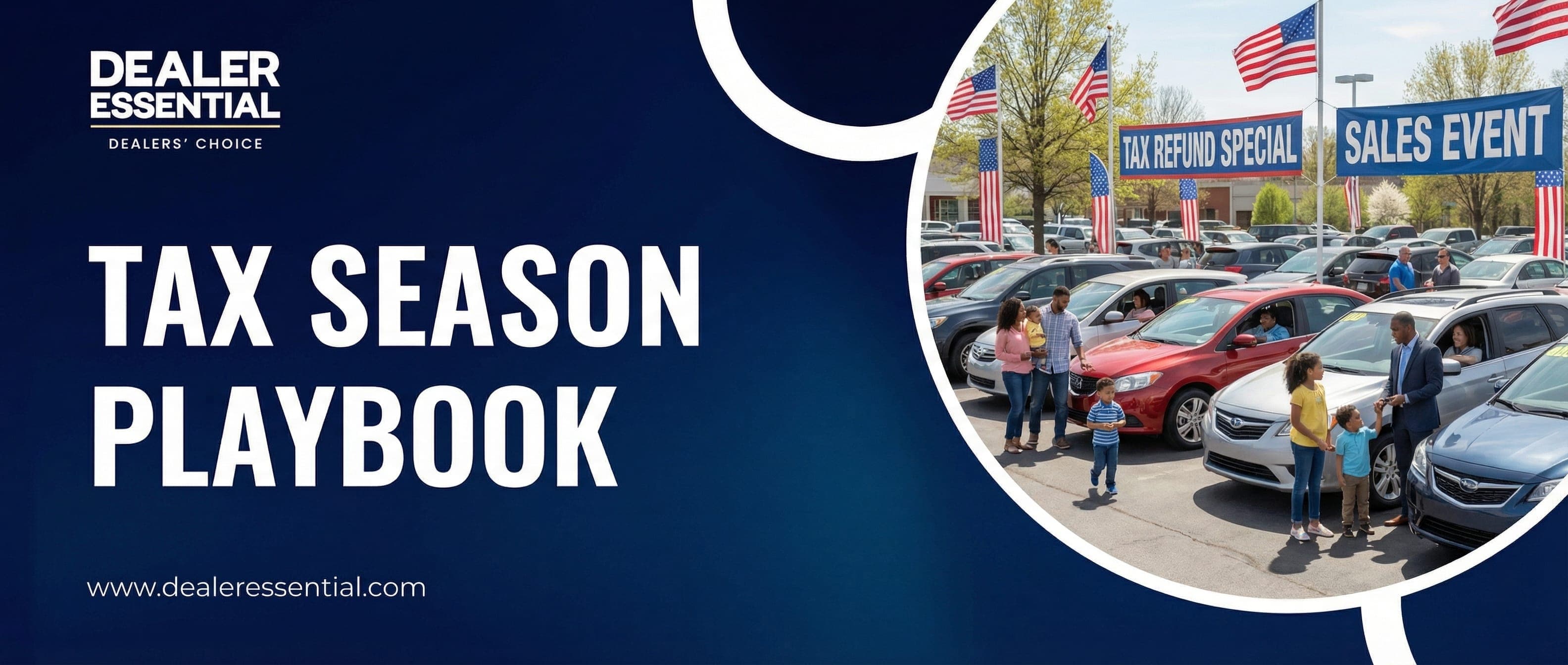
The Tax Season Window
You have roughly 8 weeks—mid-February through mid-April—when buyers walk in with $3,000-7,000 cash ready to spend. The dealers who prepare inventory, pricing, and processes in January dominate. Those who scramble in March just watch the opportunity pass.
I still remember my first tax season as a used car manager in Phoenix. It was 2009—middle of the recession—and I thought we'd be lucky to sell anything. Instead, from mid-February through April, we sold more cars than the previous four months combined. Customers showed up with tax refund checks, literally waving cash.
That experience taught me something that's shaped my entire approach to this business: tax season isn't just "busy season." It's the single biggest opportunity of the year for small independent dealers. And most of them blow it.
Over 12 years managing lots across the Southwest, I watched dealers make the same mistakes every spring. I also watched a handful of smart operators turn those 8 weeks into their entire year's profit. The difference wasn't luck or location—it was preparation and strategy.
Here's everything I learned, including the mistakes I made myself.
Why Tax Season Is Different (And Why It Matters More for Small Dealers)
Let's talk numbers first:
$3,100
Average tax refund (2024)
8 weeks
Peak refund season window
38%
Of refunds used for vehicles
2.4x
Traffic increase for small lots
Here's what makes tax season uniquely valuable for independent dealers: the typical tax refund buyer is YOUR customer, not the franchise dealer's.
Think about who gets significant refunds: working families, younger workers claiming credits, people who over-withheld throughout the year. They're not shopping for $40,000 SUVs at the Ford dealer. They're looking for reliable transportation in the $5,000-15,000 range. That's your wheelhouse.
The Cash Advantage
The Franchise Dealer Blind Spot
Here's something I noticed year after year: franchise dealers largely ignore tax season because their typical buyer finances year-round. They don't stock $8,000 cars. They don't market to refund buyers. That's a gift to you.
During tax season, you're not competing with the big boys. You're competing with other independents—and most of them aren't prepared either.
The 5 Tax Season Mistakes I See Every Year
I made most of these myself before I figured out what works. Learn from my expensive education:
Mistake #1: Starting Too Late
The IRS starts processing returns in late January. By early February, refunds are hitting bank accounts. If you're waiting until March to "gear up for tax season," you've already missed two weeks of peak buying.
I learned this the hard way in 2012. We waited until we saw traffic increase before stocking up. By the time we had inventory, our competitor down the street had already sold through 30 cars. Those were our customers.
"Tax season preparation starts in January. If you're reacting in March, you're already losing."
— A lesson I learned the expensive way
Mistake #2: Wrong Inventory Mix
Tax refund buyers have specific needs. They're typically looking for:
- $5,000-12,000 price range (matches refund + trade)
- Reliable, practical vehicles (not project cars)
- Good fuel economy (they're budget-conscious)
- Lower mileage for the price point
- Clean history—they've done their research
What they're NOT looking for: luxury vehicles, high-end trucks, sports cars, or anything that feels like a splurge. I've seen dealers stock up on BMWs and Mustangs for tax season because "people have money to spend." Wrong. They want sensible, not sexy.
Mistake #3: Pricing for Negotiation During a Seller's Market
Tax season is one of the few times of year when demand genuinely exceeds supply for affordable used cars. Smart dealers recognize this and price accordingly.
The mistake? Pricing high "to leave room for negotiation" and then watching buyers go to the dealer who just posted fair market prices. Tax refund buyers often have a specific budget—$7,000 or $10,000—and they're shopping for the best car within that number. They'll skip your $8,995 car to buy the $7,900 car down the street, even if yours is worth the extra thousand.
Mistake #4: Ignoring Subprime Financing
Here's a reality: many tax refund buyers have credit challenges. They have cash for a down payment—often $3,000-5,000—but need financing for the rest. If you can't offer subprime options, you're turning away deals.
In my Phoenix days, we partnered with three subprime lenders specifically for tax season. Our approval rate jumped from 60% to 85%. Those extra approvals were the difference between a good quarter and a great one.
Mistake #5: Thinking Short-Term
This is the big one. Too many dealers treat tax season like a gold rush—grab as much as you can and worry about tomorrow later.
The problem? Tax refund buyers who have a good experience become year-round customers. They come back for their next car. They send their family. They leave reviews. But if you rush them, oversell them, or treat them like a transaction, they never return.
The Long Game
Capture Every Tax Season Lead
Don't let the spring rush overwhelm you. Our CRM keeps every lead organized, automates follow-up, and ensures no buyer slips through the cracks.
The Tax Season Playbook: What Actually Works
After years of trial and error, here's the strategy that consistently produced results:
January: Preparation Month
Tax season success is determined before refunds even arrive:
- Audit your inventory: Do you have enough $5K-12K vehicles? If not, start buying NOW
- Clear aged units: Wholesale anything over 60 days—you need the capital and lot space
- Establish lender relationships: Talk to subprime lenders, understand their programs
- Prepare your marketing: Website, social media, signage should emphasize "tax refund specials"
- Train your team: Everyone should know how to handle cash buyers and quick deals
The Inventory Rule
February-March: Execution Mode
When refunds start flowing, shift into high gear:
- Extend hours: Many refund buyers work hourly jobs—be open when they're off
- Speed up processes: These buyers have cash; don't make them wait 4 hours
- Replenish constantly: Buy at auction weekly to replace sold units
- Track what's selling: Adjust your buying based on what's moving
- Follow up fast: Tax refund buyers are often shopping multiple dealers
April: The Transition
Tax season doesn't end abruptly—it tapers. Smart dealers adjust:
- Start shifting inventory mix back toward variety
- Keep marketing to "late filers" through mid-April
- Review what sold and what didn't—document for next year
- Follow up with every tax season buyer for reviews and referrals
The Tax Season Inventory Strategy
Let me be specific about what to stock. Based on my experience, here's what moves during tax season:
The Sweet Spot Vehicles
Tax Season Inventory Guide
| Category | Why It Works | Target Price |
|---|---|---|
| Honda Civic/Accord | Reliability reputation, fuel efficient | $7,000-12,000 |
| Toyota Camry/Corolla | Same—bulletproof image | $7,000-12,000 |
| Hyundai Elantra/Sonata | Value play, good warranty history | $5,000-9,000 |
| Ford Escape/Edge | Practical SUV for families | $8,000-14,000 |
| Nissan Altima/Sentra | Affordable, available | $5,000-9,000 |
| Mazda3/CX-5 | Quality reputation, drives well | $8,000-13,000 |
What to Avoid
- Luxury brands: Tax refund buyers aren't shopping Mercedes
- High-mileage vehicles: They want reliability, not risk
- Project cars: They need transportation, not a hobby
- Gas guzzlers: Fuel economy matters to budget buyers
- European vehicles: Repair cost reputation scares this demographic
The Numbers Game
Here's a rule I developed over the years: during tax season, I wanted to turn my entire $5K-12K inventory at least twice. If I had 20 cars in that range, I planned to sell 40+ during the season.
That means buying aggressively—hitting auctions weekly, taking more trades, even buying from private parties. You can't sell what you don't have, and tax season is the one time of year you'll wish you had more inventory.
Marketing to Tax Refund Buyers
Tax refund buyers respond to specific messaging. Here's what worked for us:
Messaging That Resonates
- "Use your tax refund as a down payment" — speaks directly to their situation
- "Reliable transportation under $10,000" — what they're actually searching for
- "Approved with $3,000 down" — addresses their likely scenario
- "In and out in under 90 minutes" — they value their time
- "No credit? We can help" — many refund buyers have credit challenges
Where to Reach Them
- Facebook Marketplace: Heavy traffic from this demographic
- Craigslist: Still relevant for budget car buyers
- Local Facebook groups: Community buy/sell groups
- Google: "Used cars under $10,000 near me" spikes in February
- Yard signs: Old school but effective in working-class neighborhoods
The Review Strategy
Playing the Long Game: From Tax Season Buyer to Lifetime Customer
Here's what separates good dealers from great ones: they understand that a tax season buyer isn't a transaction—it's the start of a relationship.
The Lifetime Value Math
A first-time buyer in their 20s who has a good experience will buy 8-10 more cars in their lifetime. If you keep them, that's $15,000-25,000 in profit over 30 years, plus referrals. Treat them like a one-time transaction, and you get one deal.
What keeps them coming back:
- A process that respected their time
- Fair pricing without games
- A car that didn't break down in 6 months
- Follow-up that felt genuine, not salesy
- Being remembered when they return
The Follow-Up System
Every tax season buyer should enter your CRM with a specific follow-up sequence:
- Day 1: Thank you text/call—"How's the car? Any questions?"
- Day 7: Review request—make it easy with a direct link
- Day 30: Check-in—"Everything still running great?"
- Month 6: Service reminder—show you care about the car lasting
- Month 12: Anniversary message—start the "when you're ready to upgrade" conversation
Tools for Building Customer Relationships
My Biggest Tax Season Lesson
In 2015, I managed a lot that had its best tax season ever. We sold 67 cars in 8 weeks—nearly double our normal volume. I was proud.
Then I looked at the data six months later. Our return rate was 12%—more than double our usual. Complaints had spiked. Reviews mentioned "felt rushed" and "pushy." We'd made money, but we'd burned bridges.
The next year, we slowed down. We focused on quality—of inventory, of process, of experience. We sold 52 cars. Fifteen fewer units. But our return rate dropped to 3%. Our reviews improved. And by the following tax season, referrals from the previous year's buyers brought us 20+ additional deals.
"Volume feels good in the moment. Quality feels good forever. Tax season will test which one you actually value."
— What I remind myself every February
The Bottom Line
Tax season is a gift for small independent dealers. Your customers—budget-conscious, cash-ready, looking for reliable transportation—show up in force for 8 weeks. The franchise dealers ignore them. The prepared independents prosper.
But preparation is everything. By the time you see the traffic increase, it's already late. The inventory decisions, the lender relationships, the marketing—all of that needs to happen in January.
And remember: every tax season buyer is a potential lifetime customer, referral source, and Google review. Treat them accordingly.
After 12 years in this business, tax season is still my favorite time of year. There's nothing like helping someone drive home in a reliable car, knowing their tax refund got them something that'll improve their life. That's why we do this.
Make the most of it.
Your Action Item
This week, audit your inventory. Count how many vehicles you have in the $5,000-12,000 range. If it's less than 60% of your lot, you have work to do before February. Hit the auctions. Make it happen.